How Muay Thai Fights Are Scored in Thailand

Almost everyone who watches Muay Thai in Thailand has, at some point, been confused by a decision. That’s because the scoring system can differ quite a bit from what you might see in Europe or North America. Below is a clear breakdown of what judges and referees in Thailand look for when scoring a fight.
Three rounds
In theory, all three rounds should carry equal weight. In practice, however, rounds 2 and 3 are often given slightly more importance, as fighters tend to increase intensity and scoring actions as the fight progresses.
Five rounds
In traditional five-round bouts, rounds 3 and 4 are the most important, with round 4 being the key scoring round. The first two rounds are often more measured, with fighters feeling each other out and establishing rhythm. Round 4 is especially significant. A fighter who may be behind can still win the entire fight by clearly dominating this round. Strong, effective scoring in round 4 can outweigh earlier rounds in the judges’ eyes.
Techniques
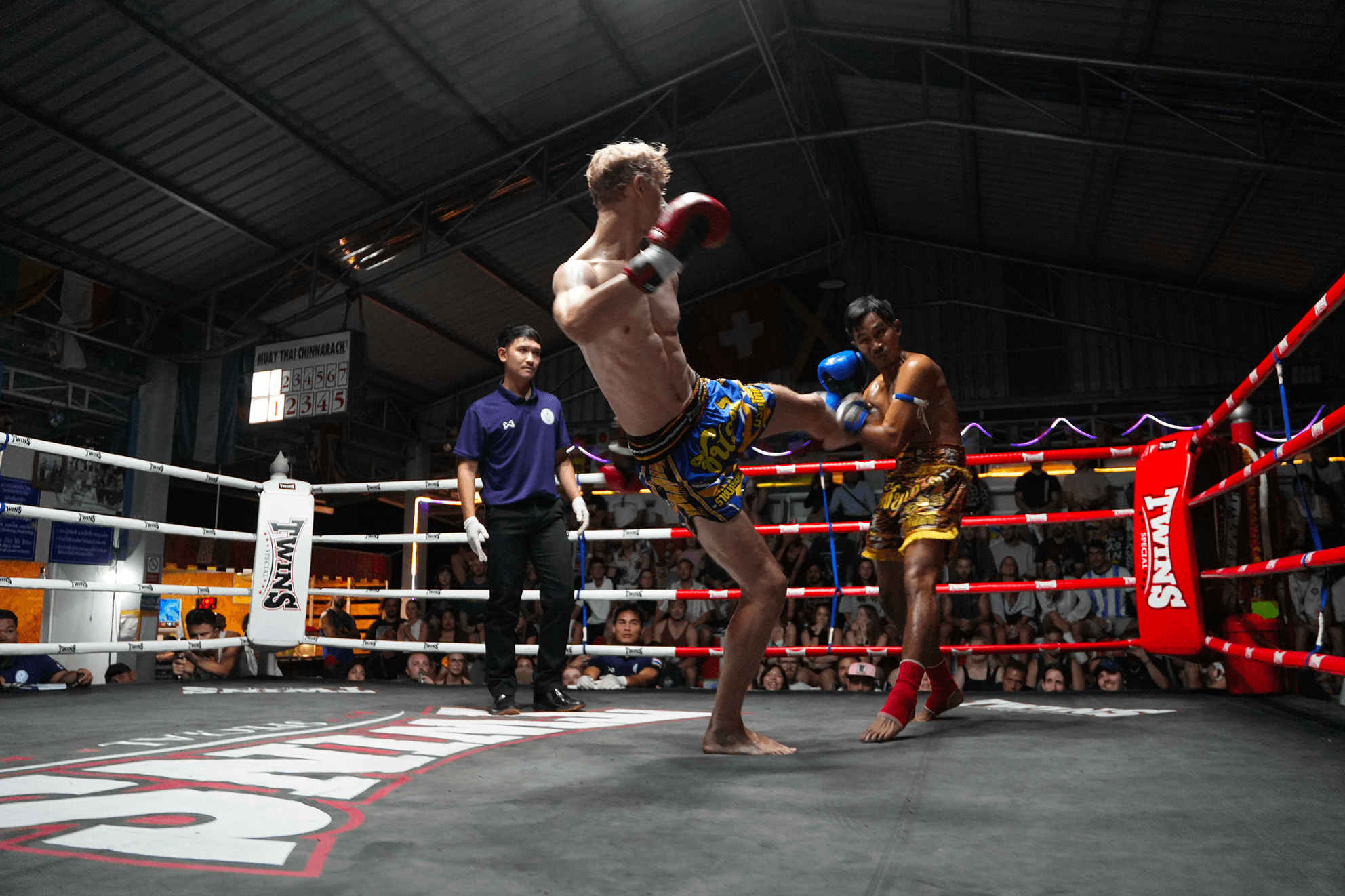
The highest-scoring techniques typically include clean roundhouse kicks to the body or head, knees (especially in the clinch), elbows to the head, and successful sweeps or takedowns that clearly put an opponent off balance or on the canvas. Techniques like front kicks, leg kicks, and punches generally score less on their own. However, they can still be effective if they visibly impact the opponent — for example, causing them to stumble, lose balance, or show clear discomfort.
Judges prioritize clean, effective strikes — meaning shots that land without being blocked or deflected. They also value visible impact. For instance, one strong, clean kick will usually score higher than multiple light or ineffective strikes. In the clinch, the fighter who controls the position and lands more clean, effective knees will typically be seen as scoring better.
Additional factors
Thai judges also pay close attention to overall control and composure. This includes:
- Effective counterattacks, especially immediate and clean responses
- Causing the opponent to lose balance or position
- Neutralizing or limiting the opponent’s offense
- Demonstrating control of the pace and rhythm of the fight
Misunderstandings
A frequent misconception is that moving forward and applying constant pressure automatically scores higher. In reality, forward movement alone does not win fights. Many successful fighters build their style around timing, defense, and counterattacking while moving backward. What matters most is not who moves forward, but who lands the more effective, higher-scoring techniques, controls the action, and shows confidence and composure.

Conclusion
Muay Thai scoring in Thailand has its own rhythm and priorities, and it can take time to fully understand. While this is only a basic overview, it should help make more sense of decisions — especially those that might seem surprising at first.