Increase the Power of Your Muay Thai Kicks
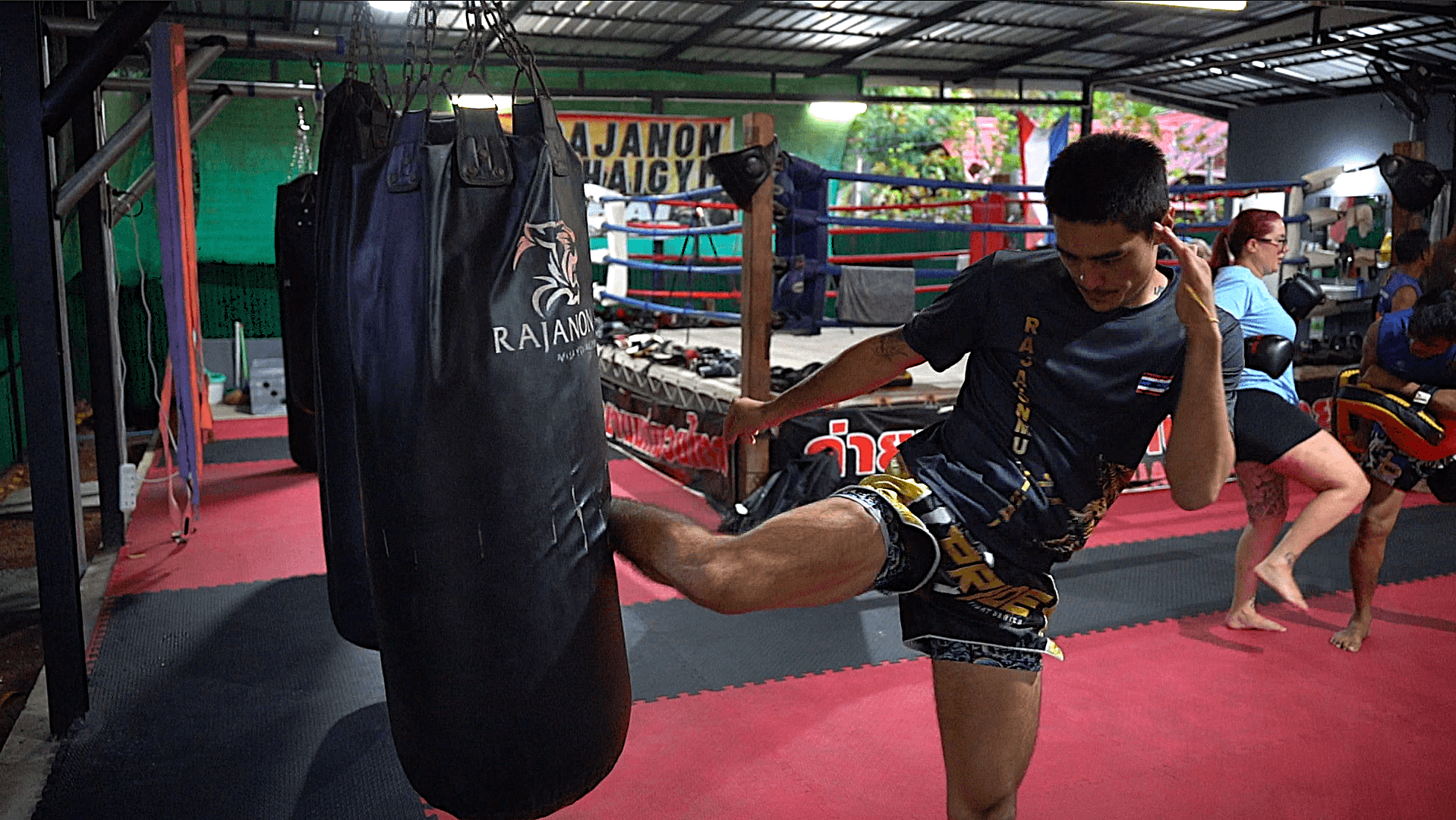
Fundamentals of Muay Thai kicks
Weak roundhouse kicks in Muay Thai aren’t about lack of strength — they’re usually the result of small technical mistakes that hold you back. Fix the fundamentals, and you’ll unlock power you didn’t even realize you had.
HIP ROTATION
One of the most common reasons kicks lack power is poor hip rotation. A strong roundhouse kick doesn’t come from the leg alone — it’s driven by the hips. If your hips don’t fully turn over, you’re essentially just lifting your leg rather than whipping it through the target. When your hips fully commit to the strike, your kick travels through the target instead of stopping on impact. This not only increases power but also makes your technique more fluid and harder to counter.
FOOT POSITION
This is a key detail that often gets overlooked, but it has a huge impact on your kicking power. As you throw your kick, you should step slightly out to the side to give your hips the space they need to rotate freely — staying too square will block your movement and limit power. At the same time, your standing foot should pivot outward, with the inside of your heel turning towards the target, and you should rise onto the ball of your foot to allow a smooth, full rotation. This combination creates a strong, fluid base that lets your hips drive through the kick instead of holding it back.
RELAX
Another common issue is being too tense. It sounds counterintuitive, but trying too hard can actually make your kicks weaker. When your muscles are stiff, your movement becomes slow and restricted. Good fighters stay relaxed until the moment of impact, then snap into the strike. Stay loose, breathe naturally, and let the kick flow rather than forcing it.
SHIN, NOT FOOT
Then there’s target contact. Many beginners hit with the instep of the foot instead of the front of the ankle or shin, which reduces both power and effectiveness. In Muay Thai, the shin is your weapon. It’s denser, stronger, and designed for impact. Proper conditioning takes time, but correct technique ensures you’re using the right part of your leg from the start.
TIMING
Finally, timing matters just as much as technique. A perfectly executed kick thrown at the wrong moment won’t feel powerful. Learning when to kick — whether it’s after a punch, during an opponent’s movement, or as a counter — can dramatically increase the effect of your strikes without requiring more effort.
Conclusion
Improving your kicks isn’t about one big change. It’s about refining small details: better rotation, foot position, more relaxation, cleaner contact, and smarter timing. Work on these consistently, and you’ll start to feel the difference — not just in power, but in confidence every time you throw a kick.
Relax, then explode. That’s how you generate real force.