Training In Muay Thai Gyms In Thailand Compared To The West
For anyone serious about Muay Thai, one question comes up again and again: what’s the real difference between training in Thailand and training back home? While both can help you improve, the experience, structure, and outcomes can feel very different.
Training Volume and Routine
The biggest difference is how often and how much you train. In Thailand, most gyms run two sessions a day, six days a week. A typical day includes a run, pad work, bag work, clinching, and conditioning — often totaling 3–5 hours of training. In the West, most people train a few times per week. Sessions are usually shorter and designed to fit around work, school, or other commitments. While still effective, the overall volume is much lower, which naturally slows down the rate of improvement.
Training Environment
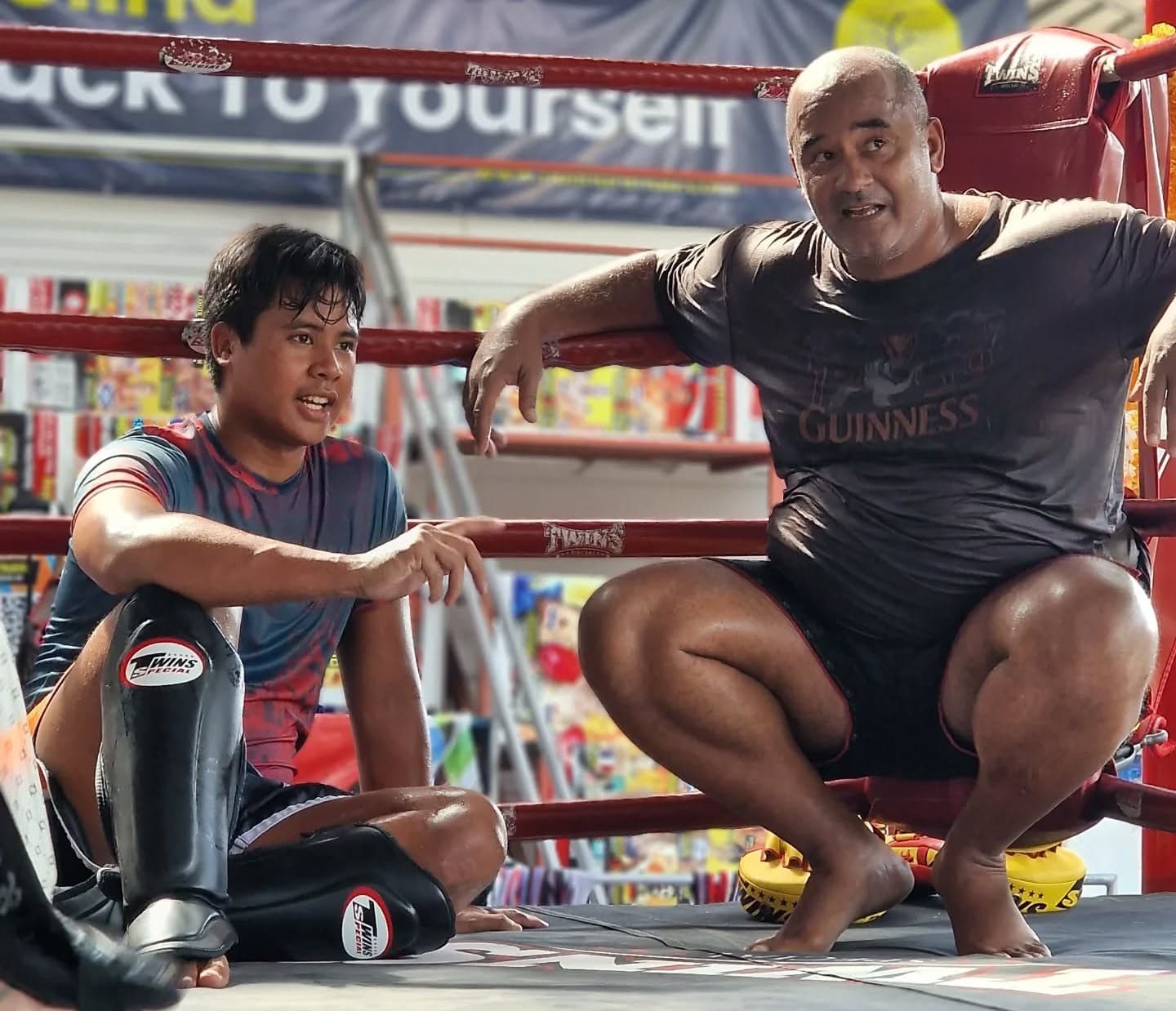
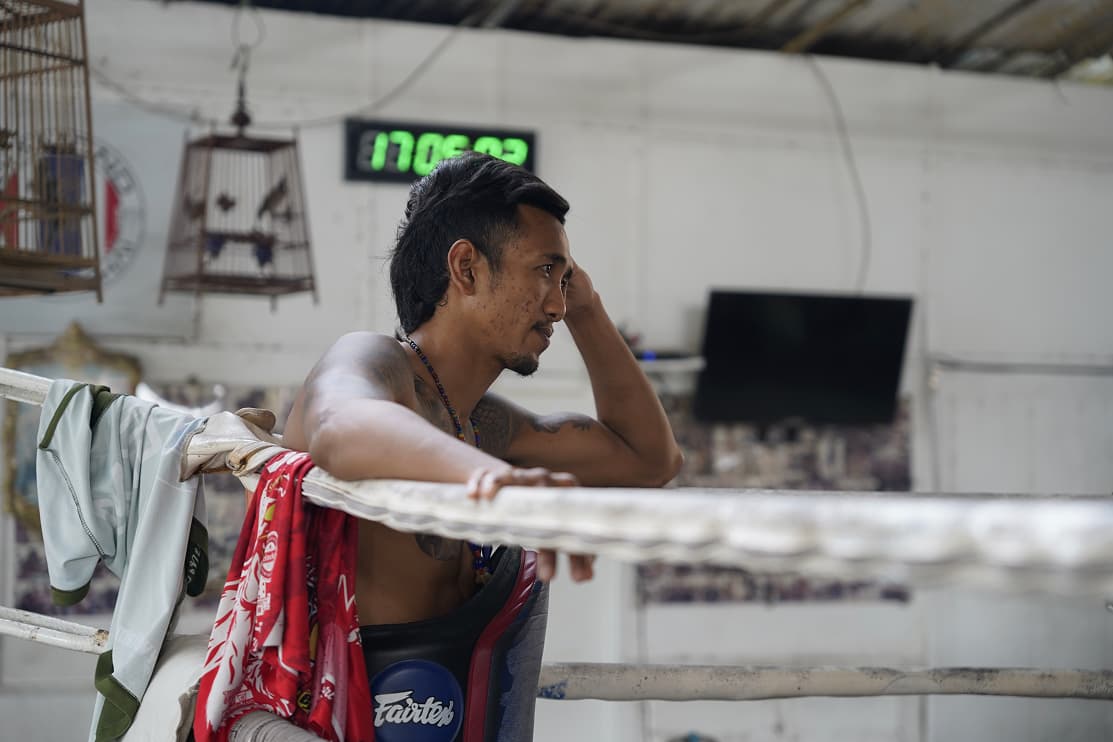
In Thailand, Muay Thai gyms are often very open and informal in structure. Fighters of all levels train together, from beginners to professionals. There’s less separation by skill level, which means you’re constantly exposed to higher-level practitioners. Western gyms tend to be more structured, with classes divided by level (beginner, intermediate, advanced). This can be helpful for learning basics, but it can also limit exposure to more experienced fighters early on.
Coaching Style
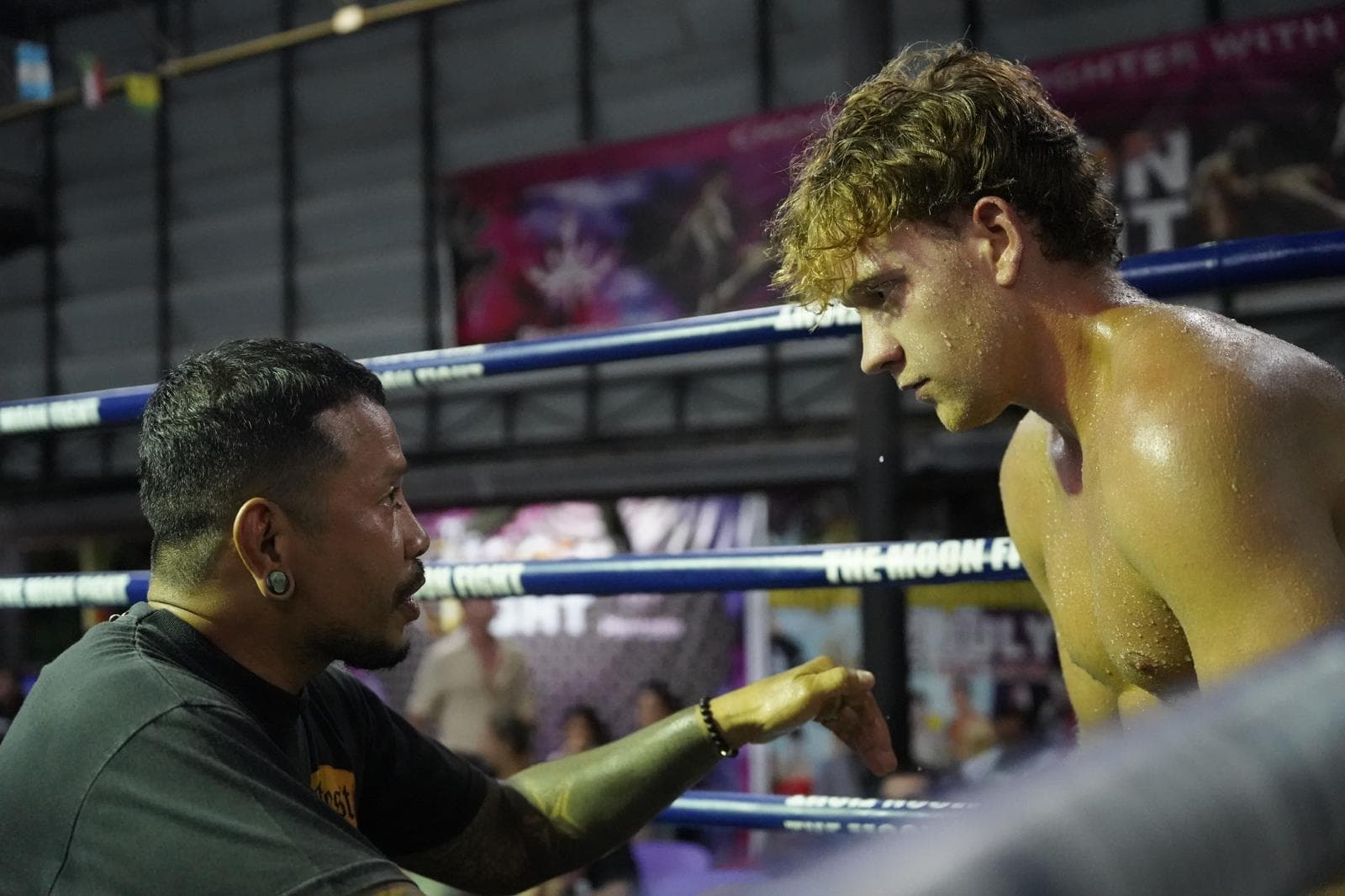
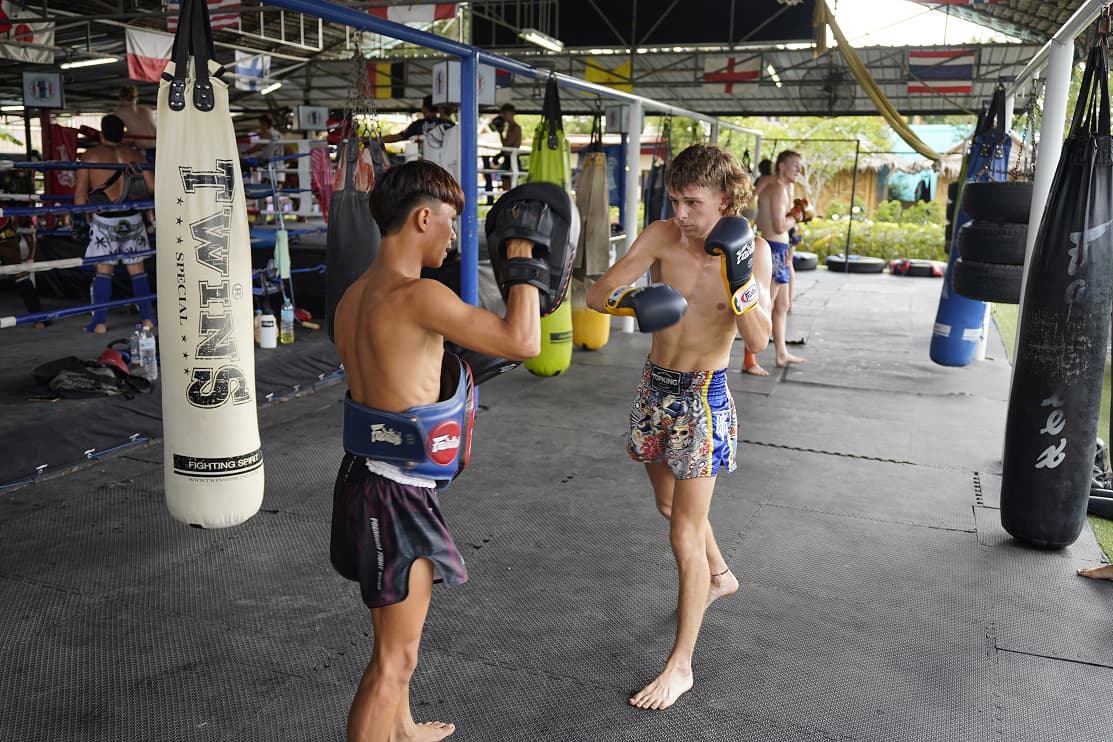
In Thailand, the trainer to student ratio is higher, often 1 trainer for every 4 students. This means you get much more attention from the trainers. Also students absolutely never hold pads in Thailand, which means that the extremely high standard of pad work you receive on a daily basis in Thailand cannot be compared to the West, where students have to hold pads for each other. Also, Thai trainers typically focus on repetition and correction through experience. Instead of long explanations, they’ll have you repeat techniques many times, making small adjustments along the way. Learning is very hands-on. In the West, coaching is often more verbal and instructional. Techniques are broken down step-by-step, with detailed explanations. This can help beginners understand concepts quickly, but sometimes comes at the expense of repetition.
Emphasis on Fundamentals
Thai gyms place heavy emphasis on mastering the basics — kicks, knees, balance, and timing. You’ll spend a lot of time doing the same techniques every day. Western gyms may include a wider variety of drills, combinations, and conditioning styles to keep classes engaging. While this can be enjoyable, it sometimes means less time spent refining core fundamentals.
Clinch Training
Clinch work is a major part of training in Thailand and is often practiced daily. It’s treated as a core skill, not an optional extra. In the West, clinching is sometimes less emphasized, with more focus placed on striking. As a result, many students have a gap in this area compared to those who train in Thailand.
Fight Culture
In Thailand, fighting is deeply integrated into training. Many gym members are active fighters, and bouts happen regularly. Even as a beginner, you’re exposed to the rhythm and reality of fighting. In the West, fewer people compete, and fights are less frequent. Training is often more fitness-focused, with competition being optional rather than central.
Neither approach is “better” — they’re just different. Training in Thailand offers immersion, high volume, and rapid development through repetition and experience. Training in the West provides structure, detailed instruction, and accessibility for those balancing other commitments. Ultimately, the best environment is the one that keeps you consistent. But if you have the opportunity to train in Thailand, even for a short time, it can give you a deeper understanding of Muay Thai and accelerate your progress in a way that’s hard to replicate elsewhere.