Best Time to Train Muay Thai in Thailand: Weather & Seasons
There is no single best time to train Muay Thai in Thailand. The weather changes significantly depending on which part of the country you visit. Koh Phangan and the Gulf islands have a different rainy season from Phuket and the Andaman coast. Bangkok has a particularly demanding hot season, while Chiang Mai has an annual smoke and PM2.5 problem that can affect outdoor training. If you are coming to Thailand primarily for Muay Thai, it therefore makes sense to choose the destination and the time of year together.
When Is the Best Time to Train Muay Thai in Thailand?
Thailand's different regions have different seasonal advantages and problems. For a normal holiday, a few hours of rain or an especially hot day might not matter much. It can matter considerably more when you are training twice per day, running, travelling between your accommodation and gym, eating and recovering before the next session. There is also no need to completely avoid Thailand because one region is experiencing bad weather. When conditions are less suitable in one part of the country, another region can often be a better option.
Best Time to Train Muay Thai on Koh Phangan
Koh Phangan is in the Gulf of Thailand. Koh Samui and Koh Tao broadly follow the same weather pattern, which differs from Phuket and Krabi on the Andaman coast. Weather varies from year to year, so the dates below should be treated as approximate seasonal periods rather than exact changes.
Mid-December to Mid-April — High Season
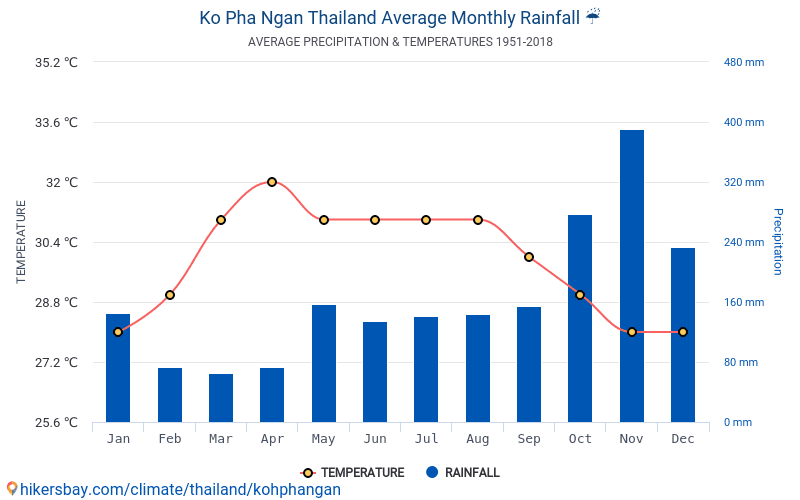
This is generally the driest and sunniest part of the year on Koh Phangan. Rain is limited, particularly from January onward. Temperatures begin rising in March, and April becomes noticeably hotter. The main high season runs approximately until Songkran, the Thai New Year celebrated from 13–15 April. For someone who wants good weather both for training and enjoying the island, this is the most obvious period to visit. The disadvantage is that it is also the island's main tourist season.
Mid-April to End of June — Low Season
After the main high season, Koh Phangan becomes much quieter. This is a hotter and more humid period, with occasional tropical showers, but conditions remain suitable for Muay Thai training. It can be a good period if your priority is training, you prefer fewer tourists and you don't mind training in hotter weather.
July to Mid-September — Second High Season
Koh Phangan gets another good-weather period during the European summer. July and August normally have plenty of dry weather mixed with occasional tropical showers. The island becomes busier again, but remains considerably less crowded than during the main high season. Rain generally begins becoming more frequent toward late September. For many people, this is one of the most useful periods for combining Muay Thai training with good island weather.
Mid-September to Mid-December — Rainy Season
Rain becomes increasingly frequent during this period, with October and November normally receiving the heaviest rainfall. Rain often comes as strong tropical showers rather than continuous rain throughout the entire day, although longer periods of rain can occur. This does not necessarily make rainy season a bad time for serious Muay Thai training.
Why Fighters Often Like Koh Phangan's Rainy Season
Koh Phangan is a small island. If you choose accommodation close to your gym, bad weather is relatively easy to manage because the journey between your room and training can be very short. This can be more convenient than training in larger destinations such as Phuket, Bangkok or Pattaya, where travelling between your accommodation and the gym can take tens of minutes or longer. Heavy rain becomes much more disruptive when every training session requires a longer journey. The island is also quieter during rainy season and temperatures are cooler.
From our experience, many fighters particularly enjoy this period for serious training because there are fewer distractions and the weather is more comfortable for high training volumes. If your main reason for coming to Thailand is training rather than having perfect beach weather every day, rainy season should therefore not automatically be excluded.
Phuket and Krabi — Andaman Coast
Phuket and Krabi are on the opposite side of southern Thailand and follow a different seasonal weather pattern from Koh Phangan and the Gulf islands.
May to October — Rainy Season
The Andaman coast receives much of its rain during the southwest monsoon, with September and October among the wettest months. Frequent heavy showers, rougher sea conditions and less predictable weather can make this period less convenient for a training-focused trip. Generally better to avoid if weather is an important part of your training trip.
November to April — Better Weather, More Tourists
November to April brings much better weather to the Andaman coast, but it is also the main tourist season. Phuket in particular can become extremely busy during the peak period around December to February. Traffic, crowded tourist areas and higher accommodation prices can make maintaining a simple gym → food → recovery routine less convenient. For a serious training trip, perfect weather does not always mean the best overall training environment.
When Phuket or Krabi have better weather than Gulf
The difference between the Gulf and Andaman seasons can actually help when planning a longer Muay Thai trip. When Koh Phangan and the Gulf islands are experiencing their heaviest rain, the Andaman coast is moving toward its better-weather period. If you are travelling during the Gulf's wettest months, Phuket or Krabi can therefore be a good alternative, particularly outside the busiest Christmas and New Year weeks.
Bangkok and Pattaya
Bangkok and Pattaya follow broadly similar seasonal timing, although Pattaya is coastal while Bangkok is inland. For a Muay Thai trip, the two main considerations are heat in Bangkok and peak tourist season in Pattaya.
Bangkok — Be Careful With the Hot Season
Thailand's hot season generally runs from March to May, with April normally particularly hot. Bangkok can become extremely hot and humid during this period. Dense urban conditions and the lack of coastal cooling can make running, twice-daily Muay Thai training, recovery and travelling around the city particularly exhausting. If Bangkok is your main destination for a serious Muay Thai training trip, we recommend avoiding the hottest period where possible.
Pattaya — Heat and Peak Tourist Season
Pattaya is coastal and generally less temperature-extreme than Bangkok, although March to May is still very hot and humid. Another consideration is its main winter tourism period, particularly November to February. Heavy traffic, crowded tourist areas and more distractions can make this period less convenient if your main reason for staying in Pattaya is serious Muay Thai training.
Chiang Mai — Avoid Smoke Season for Training
Chiang Mai has a different seasonal problem: smoke and PM2.5 air pollution. Northern Thailand's recurring smoke season generally affects February to April, with conditions often becoming particularly severe during March and April. Agricultural burning, wildfires and weather and geographical conditions can result in high concentrations of fine particulate matter. This matters directly for Muay Thai training. Running and other high-intensity outdoor exercise may become inappropriate when air quality is poor. If Muay Thai training is the main purpose of your trip, we recommend avoiding Chiang Mai during smoke season where possible. If you are already there during this period, check current AQI and PM2.5 levels before running or doing high-intensity training outdoors.
Thailand Muay Thai Training Seasons at a Glance
- Koh Phangan, Koh Samui and Koh Tao (Gulf of Thailand): main rain October–November; main high season mid-December–mid-April; second high season July–mid-September.
- Phuket and Krabi (Andaman coast): rainy season May–October; better weather November–April, but Phuket becomes particularly busy during peak high season.
- Bangkok: March–May heat can make intensive training considerably more demanding.
- Pattaya: particularly busy during the November–February tourist season.
- Chiang Mai: February–April smoke and PM2.5 are the main seasonal concern for a training trip.
One of the most useful differences is between the Gulf of Thailand and the Andaman coast. Their wettest periods do not occur at the same time, so changing region can sometimes give you much better conditions without changing the dates of your Thailand trip.
Choose Your Destination and Season Together
The best time to train Muay Thai in Thailand depends on what you want from the trip. If you want the best chance of dry island weather, the main high seasons are the obvious choice. If your priority is serious training, quieter periods can sometimes be better even when the weather is less perfect. And if one region is experiencing its most difficult season, another part of Thailand may offer much better conditions. There is no single “best season” for Muay Thai in Thailand. Choose the destination and the time of year together. If you are planning a training trip to Koh Phangan, explore our Muay Thai Camps Packages. You can also find more useful info about how to plan your training trip to Thailand in our free guide.